Steel Plate for Industrial Applications — Specifications and Procurement
Carbon, alloy and stainless steel plate — grades, tolerances, surface conditions and the logic behind selecting plate for industrial use.
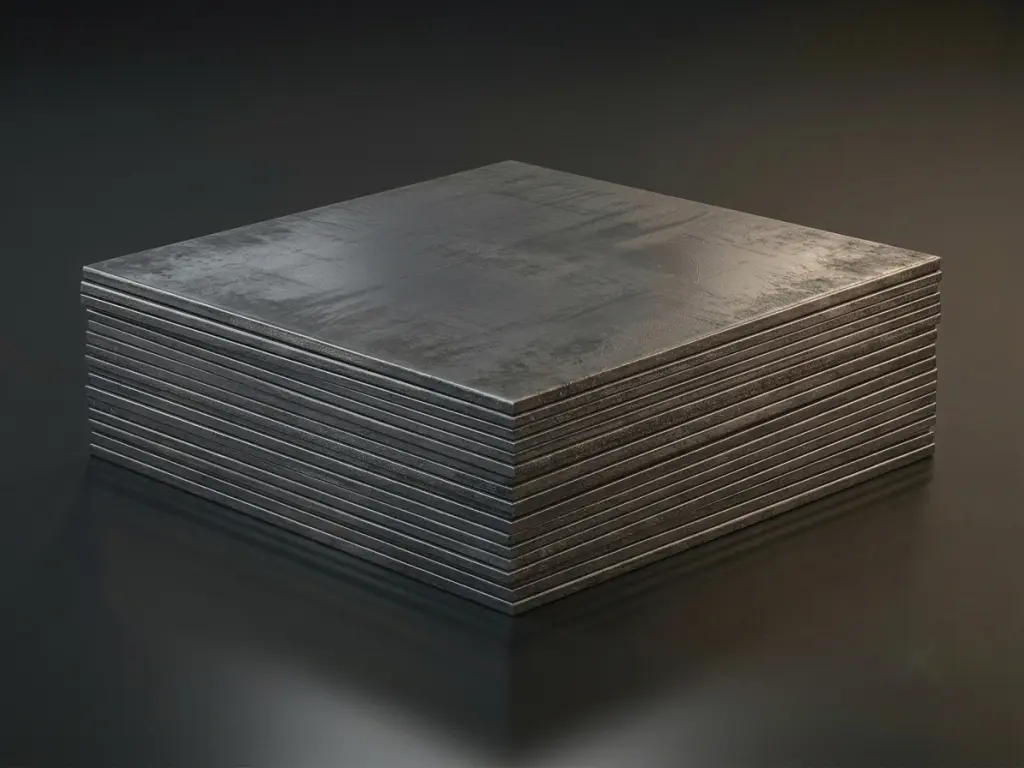
This article provides general technical reference. Grade selection should be verified against the applicable product standard, project specification, design code and service environment.
Steel plate is one of the most versatile industrial materials. It forms the structural backbone of buildings, bridges and ships; it is the raw material for pressure vessels and storage tanks; and it appears in nearly every heavy-equipment fabrication. Specifying it correctly requires understanding the categories of plate, the standards that govern them and the tolerances that determine real-world usability.
Categories of Steel Plate
Plate is generally divided into four families by chemistry and intended service:
- Carbon steel plate — the most common category. Covers structural grades (ASTM A36), pressure vessel grades (ASTM A516), and shipbuilding grades (ASTM A131).
- Alloy steel plate — typically used in elevated-temperature service or where higher strength is required. ASTM A387 covers chromium-molybdenum alloy plate for pressure vessels.
- Stainless steel plate — used for corrosion-resistant service in chemical, food and pharmaceutical applications. ASTM A240 is the standard sheet/plate specification.
- High-strength low-alloy (HSLA) plate — combines good formability with higher strength-to-weight ratios for structural applications.
Grades in Industrial Practice
A small number of grades dominate industrial procurement:
- ASTM A36 1 — the general structural plate. Used where strength and weldability matter and service conditions are ambient.
- ASTM A572 Gr 50 2 — higher-strength structural plate for building and bridge applications.
- ASTM A516 Gr 70 3 — the standard pressure vessel plate for moderate and lower-temperature service.
- ASTM A387 Gr 11/22 4 — chrome-moly plate for elevated-temperature service in refineries and power plants.
- ASTM A240 Type 304/316 5 — stainless plate for corrosion-resistant service.
These grades, and their equivalents under EN 10025 6, JIS G3101 and other regional systems, cover the overwhelming majority of industrial plate specifications.
Thickness, Width and Tolerances
Plate is normally ordered by thickness, width and length. Thickness tolerance is governed by the plate standard — typically ±0.01” for thin plate and a percentage-based tolerance for thicker plate. Width and length tolerances are looser but should still be verified for precision applications.
For heavy plate (above 50mm), ultrasonic examination in accordance with ASTM A578 or EN 10160 is often required to detect internal laminations.
Surface Condition
Surface condition matters more than is sometimes recognised. For fabrication, plate is typically supplied as-rolled, hot-rolled descaled, or shot-blasted and primed. For stainless plate, surface finish (2B, No. 4, BA) is specified separately from grade.
For pressure vessel work, plate must be free of surface defects that could impair inspection or service. MTC documentation should confirm surface condition and any repair work performed at the mill.
Procurement Best Practice
Plate is most efficiently procured to a precise specification, including grade, thickness tolerance, testing requirements and delivery condition. The most common procurement issues arise from under-specification:
- Omitting testing requirements (UT, Charpy, Z-direction).
- Conflating different regional grades without verifying equivalents.
- Failing to specify delivery condition (e.g. normalised, quenched and tempered).
- Specifying standard length only when cut lengths would reduce fabrication cost.
Working with a supplier that maintains stock in a range of grades and thicknesses, and that can support both mill-direct and stockist supply, substantially reduces lead time for project work.
References
-
ASTM International, ASTM A36/A36M — Carbon Structural Steel. ASTM A36 ↩
-
ASTM International, ASTM A572/A572M — High-Strength Low-Alloy Columbium-Vanadium Structural Steel. ASTM A572 ↩
-
ASTM International, ASTM A516/A516M — Pressure Vessel Plates, Carbon Steel, for Moderate- and Lower-Temperature Service. ASTM A516 ↩
-
ASTM International, ASTM A387/A387M — Pressure Vessel Plates, Alloy Steel, Chromium-Molybdenum. ASTM A387 ↩
-
ASTM International, ASTM A240/A240M — Chromium and Chromium-Nickel Stainless Steel Plate, Sheet, and Strip for Pressure Vessels and for General Applications. ASTM A240 ↩
-
European Committee for Standardization (CEN), EN 10025 — Hot rolled products of structural steels. EN 10025 ↩
اقتبس كـ Wayland Steel Editorial Team (2026). Steel Plate for Industrial Applications — Specifications and Procurement. Wayland Steel Insights. https://www.waylandsteel.com.cn/ar-sa/insights/steel-plate-specifications-procurement/
هل تحتاج حلاً معدنياً صناعياً?
توفر Wayland Steel منتجات الفولاذ وسبائك النحاس وحلول الألومنيوم للتطبيقات الصناعية العالمية.