Metal Product Forms Explained: Plates, Sheets, Coils, Pipes and Bars
A practical guide to common metal product forms — plates, sheets, coils, pipes, tubes, bars, wires and structural sections — covering manufacturing routes, typical applications and selection considerations for industrial procurement.
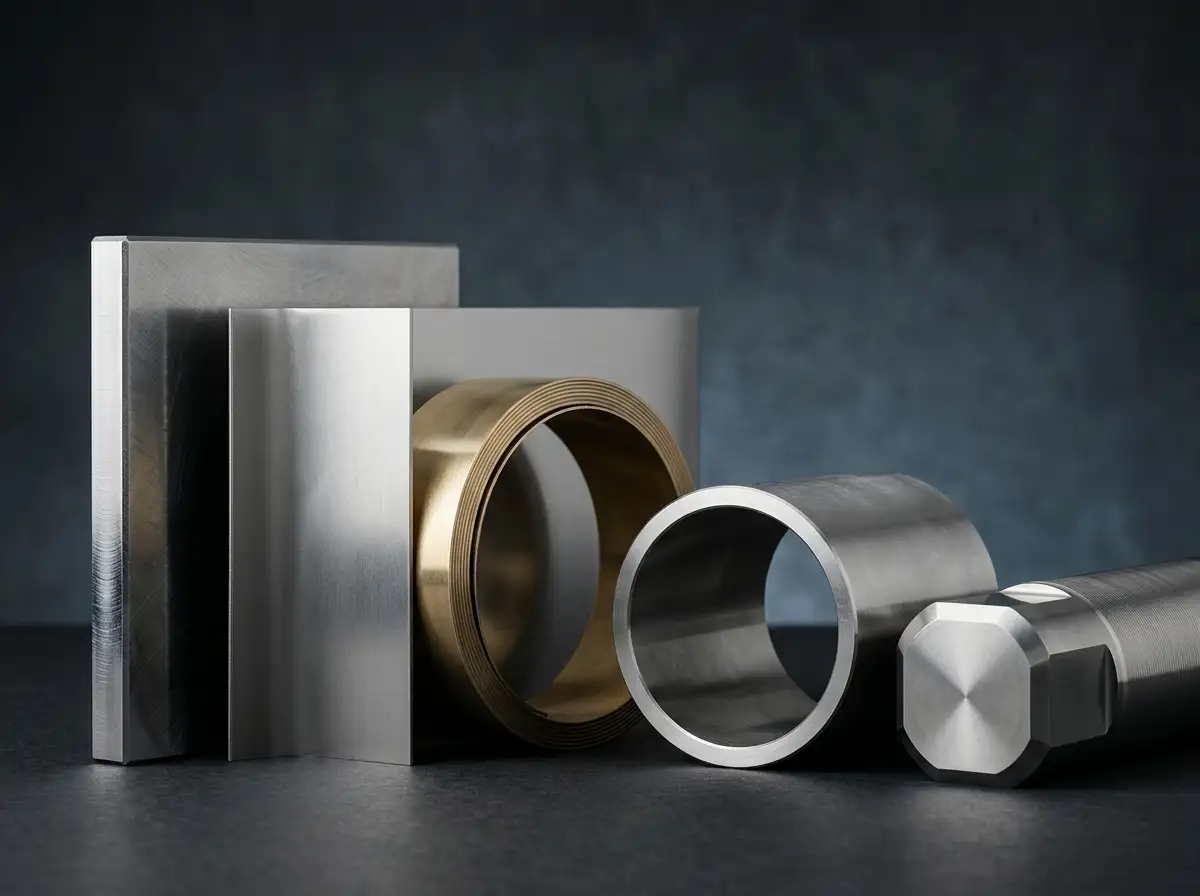
This article provides general technical information about common industrial metal product forms and their typical applications. Final material specifications should always be defined according to the applicable product standard, dimensional tolerances, surface requirements and inspection documentation for the intended use.
Introduction
Industrial metals are supplied in different product forms depending on their intended applications, manufacturing processes and fabrication requirements.
The same material grade can often be produced as plates, sheets, coils, pipes, tubes, bars or structural sections. Each form provides different advantages in terms of processing, transportation, fabrication methods and end-use applications.
For engineers, designers and procurement professionals, understanding common metal product forms is an important part of material selection.
A complete material specification usually includes:
- Material standard
- Grade
- Product form
- Dimensions
- Surface condition
- Inspection requirements
For example, stainless steel, carbon steel or aluminum alloy may be available in multiple product forms, but the suitable form depends on how the material will be processed and used.
1. Why Metal Product Forms Matter
Metal product forms are closely related to manufacturing processes and application requirements.
A material supplier may provide the same alloy in different forms, but each form is produced and used differently.
Product form selection affects:
- Fabrication methods
- Machining requirements
- Welding processes
- Material utilization
- Transportation efficiency
- Final component design
For example:
- A steel plate may be selected for fabrication of equipment shells.
- A pipe may be selected for fluid transportation.
- A bar may be selected for machining components.
- A structural section may be selected for load-bearing frameworks.
Choosing the appropriate product form helps optimize both manufacturing efficiency and application performance.
2. Metal Plate
What Is Metal Plate?
Metal plate is a flat metal product commonly used where thickness, strength and structural performance are important.
Common materials supplied as plates include:
- Carbon steel
- Stainless steel
- Alloy steel
- Aluminum alloys
- Nickel alloys
Typical Applications
Metal plates are widely used in:
- Industrial equipment
- Pressure-related applications
- Machinery fabrication
- Structural components
- Heavy-duty manufacturing
Key Considerations
When selecting metal plate, engineers usually consider:
- Material grade
- Thickness requirements
- Mechanical properties
- Corrosion resistance
- Fabrication requirements
- Applicable standards
For demanding applications, documentation such as material certificates and inspection records may also be required.
3. Metal Sheet
What Is Metal Sheet?
Metal sheet refers to thinner flat metal products manufactured through rolling processes.
Sheets are commonly selected when forming, surface appearance or lightweight fabrication are important.
Common materials include:
- Stainless steel
- Aluminum alloys
- Carbon steel
- Copper alloys
Typical Applications
Metal sheets are commonly used in:
- Enclosures and panels
- Equipment covers
- Fabricated components
- Architectural applications
- General manufacturing
Sheet vs Plate
Although both are flat products, the distinction between sheet and plate is generally related to thickness classification and industry standards.
The exact boundary depends on:
- Material type
- Applicable standard
- Regional practice
Therefore, product specifications should always refer to the relevant standard rather than relying only on general terminology.
4. Metal Coil
What Is Metal Coil?
Metal coil is a continuous flat metal product produced by rolling and supplied in a coiled form.
Coils are widely used in manufacturing processes that require continuous material feeding.
Common coil materials include:
- Carbon steel
- Stainless steel
- Galvanized steel
- Aluminum alloys
Typical Applications
Metal coils are used in:
- Automotive components
- Construction products
- Manufacturing lines
- Fabricated metal products
Advantages of Coil Products
Coil supply provides benefits such as:
- Efficient storage
- Continuous processing capability
- Reduced handling during manufacturing
- Suitability for automated production
Coil products are particularly important in industries using high-volume forming and fabrication processes.
5. Metal Pipe and Tube
What Are Metal Pipes and Tubes?
Pipes and tubes are hollow metal products used for transporting fluids, gases or serving structural purposes.
They are available in materials including:
- Carbon steel
- Stainless steel
- Alloy steel
- Aluminum alloys
- Nickel alloys
5.1 Pipes
Pipes are commonly specified for applications involving:
- Fluid transportation
- Pressure systems
- Industrial processes
Important specifications often include:
- Material grade
- Outer diameter
- Wall thickness
- Length
- Manufacturing standard
Common manufacturing categories include:
- Seamless pipe
- Welded pipe
5.2 Tubes
Tubes are widely used where dimensional precision, heat transfer performance or structural characteristics are important.
Typical applications include:
- Heat exchangers
- Mechanical components
- Instrumentation systems
- Structural applications
Pipe and Tube Selection Factors
Selection depends on:
- Operating pressure
- Temperature
- Corrosion environment
- Fabrication requirements
- Applicable standards
Different industries may use different specifications depending on the application.
6. Metal Bar
What Is Metal Bar?
Metal bar is a solid metal product supplied in various shapes, including:
- Round bar
- Flat bar
- Square bar
- Hexagonal bar
Common materials include:
- Carbon steel
- Stainless steel
- Alloy steel
- Aluminum alloys
- Nickel alloys
Typical Applications
Bars are widely used for:
- Machined components
- Shafts
- Fasteners
- Mechanical parts
- Industrial fabrication
Selection Considerations
Important factors include:
- Strength requirements
- Machinability
- Surface condition
- Dimensional accuracy
- Heat treatment requirements
7. Metal Wire and Wire Products
What Is Metal Wire?
Metal wire is a long, slender product manufactured through drawing or forming processes.
Common materials include:
- Carbon steel
- Stainless steel
- Copper alloys
- Nickel alloys
Typical Applications
Wire products are used in:
- Industrial components
- Springs
- Mesh products
- Electrical applications
- Manufacturing processes
Selection depends on:
- Tensile requirements
- Flexibility
- Corrosion resistance
- Application environment
8. Structural Sections and Profiles
What Are Structural Sections?
Structural sections are engineered metal shapes designed to support loads in construction and industrial applications.
Common forms include:
- Beams
- Channels
- Angles
- Hollow sections
Materials commonly include:
- Carbon steel
- Stainless steel
- Aluminum alloys
Typical Applications
Structural sections are used in:
- Buildings
- Infrastructure
- Industrial facilities
- Equipment frameworks
Key Selection Factors
Engineers consider:
- Load requirements
- Structural design standards
- Welding requirements
- Environmental exposure
The selected section depends on both structural requirements and fabrication methods.
9. How Product Forms Relate to Material Specifications
A complete metal specification usually combines several elements:
Material
Example:
Stainless steel 316
Standard
Example:
ASTM A312 1
Product Form
Example:
Seamless pipe
Dimensions
Example:
Diameter, thickness and length
Inspection Requirements
Example:
EN 10204 inspection documents 2
Together, these details define the actual material requirement.
10. Selecting the Appropriate Metal Product Form
The correct product form depends on the relationship between material properties and application requirements.
Examples:
Industrial Equipment Fabrication
Common forms:
- Plate
- Sheet
- Tube
Important considerations:
- Fabrication method
- Strength
- Corrosion resistance
Fluid Transportation Systems
Common forms:
- Pipe
- Tube
Important considerations:
- Pressure requirements
- Temperature conditions
- Material compatibility
Machined Components
Common forms:
- Bar
- Rod
Important considerations:
- Machinability
- Dimensional accuracy
- Mechanical properties
Structural Applications
Common forms:
- Structural sections
- Plate
Important considerations:
- Load capacity
- Design requirements
- Fabrication methods
Conclusion
Metal product forms are an essential part of industrial material selection.
Understanding the differences between plates, sheets, coils, pipes, tubes, bars and structural sections helps engineers and buyers evaluate materials more effectively.
A complete specification requires more than choosing a material grade. The correct combination of:
- Material
- Standard
- Product form
- Dimensions
- Inspection requirements
ensures that the selected metal meets the technical requirements of its intended application.
Wayland Steel supplies a wide range of ferrous metals, non-ferrous metals and special alloy materials in various product forms, including plates, sheets, coils, pipes, tubes, bars and structural sections, according to recognized international standards.
References
Zitieren als Wayland Steel Editorial Team (2026). Metal Product Forms Explained: Plates, Sheets, Coils, Pipes and Bars. Wayland Steel Insights. https://www.waylandsteel.com.cn/de-de/insights/metal-product-forms-plates-sheets-coils-pipes-bars/
Benötigen Sie eine industrielle Metalllösung?
Wayland Steel liefert Stahlprodukte, Kupferlegierungen und Aluminiumlösungen für globale industrielle Anwendungen.